

BEGINNER GUIDE
Keto for Beginners: A Simple Guide to Getting Started
What to eat, how many carbs to aim for, and how to get through your first week.
THE SHORT ANSWER
Keto for beginners, in plain terms: keto is a very low-carb, higher-fat way of eating. Keeping carbs low moves your body toward using fat for fuel instead of sugar from carbohydrates. Meals are built around meat, fish, eggs, dairy, non-starchy vegetables and healthy fats, with bread, sugar and starchy foods kept to a minimum.
THE BASICS
How keto works
Most of the time, your body runs mainly on glucose from carbohydrates. When you eat very few carbs for a few days, it starts breaking down more fat, and the liver turns some of it into ketones that many tissues can use for energy.
This state is called ketosis. How quickly you get there, and how it feels, differs from person to person.
YOUR PLATE
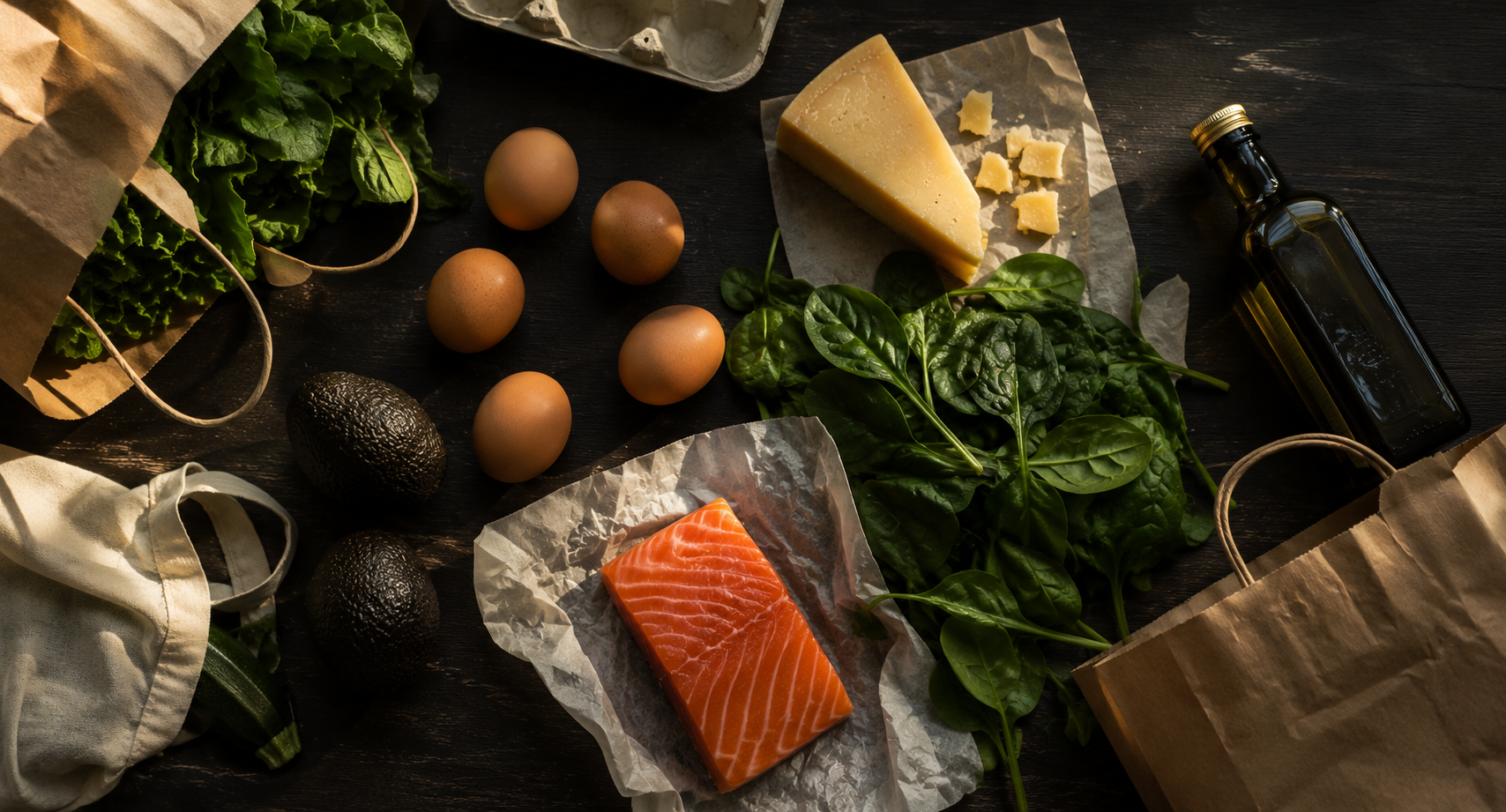
What to eat on keto
Build meals from the first list. Keep the second list small or leave it out.
 PROTEINPROTEIN
 PROTEIN
 DAIRY
DAIRY PRODUCE
 FATSFATS
 SMALL PORTIONS
 DRINKS
- Bread, pasta, rice and cereal
- Sugar, sweets and regular soda
- Potatoes and other starchy vegetables
- Most fruit and fruit juice
- Beans and lentils
- Beer and sweet drinks
- Sauces and dressings with added sugar
NET CARBS
How many carbs?
Many people aim for roughly 20 to 50 g of net carbs a day. The right number varies by person, depending on things like body size and how active you are.
Net carbs are total carbs minus fiber. Fiber passes through mostly undigested, so it is left out of the count.
Total carbs−Fiber=Net carbs
WATCH FOR
Common beginner mistakes
- Hidden carbs in saucesKetchup, marinades and dressings often contain sugar. A quick label check helps.
- Not eating enoughCutting carbs and fat at once can leave you hungry and tired. Eat full meals.
- Skipping electrolytesEarly on you may lose more water and salt. Salt your food and keep drinking water.
- Expecting instant resultsBodies adjust at different speeds. Give it a few weeks before you judge.
- Over-complicating mealsSimple works: a protein, a vegetable and a fat on the plate.
 TROUBLESHOOTING
GETTING STARTED
Your first week in 5 steps
- Clear the pantryMove bread, sugary snacks and sweet drinks out of easy reach.
- Plan 7 daysChoose breakfasts, lunches, dinners and a snack before the week starts.
- Shop from a listBuy what the plan needs and check labels for added sugar.
- Track carbsFor the first weeks, note your net carbs to learn where they hide.
- Water and saltDrink regularly and get enough salt and other electrolytes.

FREE DOWNLOAD
Start your first week with a plan.
Seven days of meals with portions and macros, plus a shopping list.
Common questions
What can I eat on keto?+
Build each plate around a protein, add non-starchy vegetables, and use fat for cooking and flavor, such as salmon with buttered greens or a cheese and spinach omelette. Ordinary supermarket food works; specialty keto products are optional.
How long does it take to get into ketosis?+
Often within a few days of eating very few carbs, though some people take longer. Your previous diet, activity level and how strictly you cut back all play a part.
How many carbs a day should I eat on keto?+
A common approach is to start near the low end for the first few weeks, then add a few grams at a time and notice how you feel. Most of those carbs usually come from vegetables, nuts and dairy rather than bread or fruit.
Is keto safe for everyone?+
It isn’t a good fit for everyone, including during pregnancy or breastfeeding. If you have diabetes, kidney disease or a history of disordered eating, or take medication for blood sugar or blood pressure, talk to your doctor first, as doses sometimes need adjusting.
Can I eat fruit on keto?+
Yes, in small amounts. Berries are the easiest to fit in, since a small handful of raspberries has far fewer net carbs than a banana or an apple. Our guide to keto-friendly fruits compares common options side by side.
Do I need to count calories on keto?+
Not at first: many people find low-carb meals filling and eat less without counting. Calories still matter for weight change, so if progress stalls, check portions; tracking tools are included in the 90-Day Keto Toolkit if you want them.
General information, not medical advice. Talk to your doctor before making big changes to your diet, especially if you have a health condition or take medication.